Last updated November 21, 2026
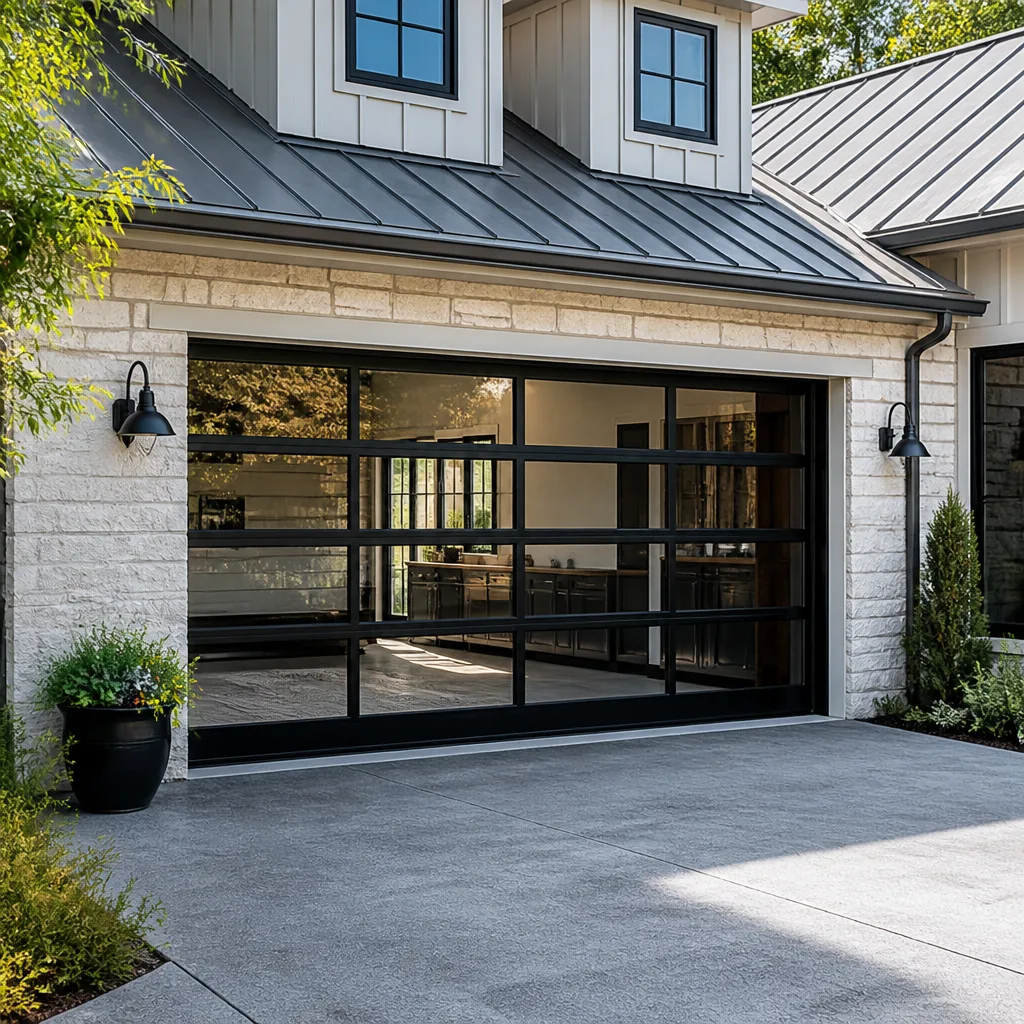 Full-view glass
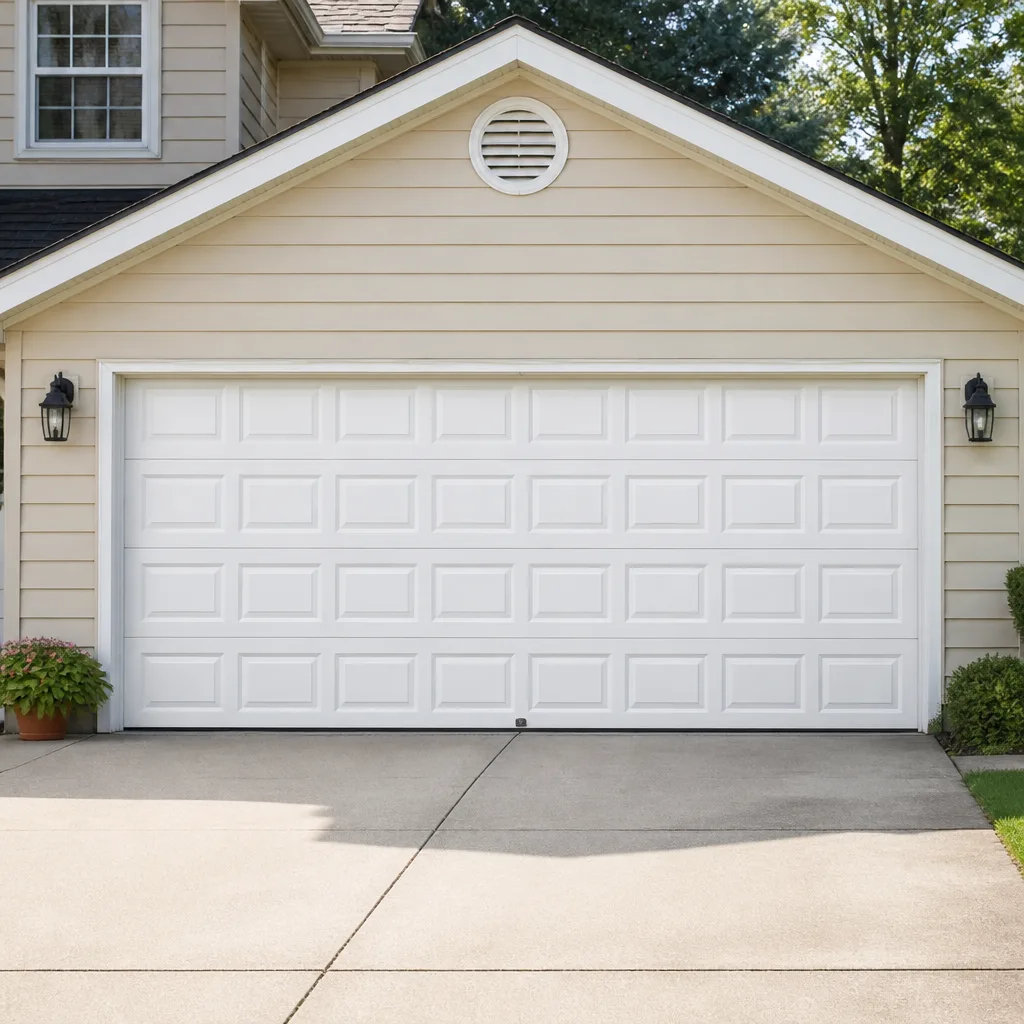 Raised-panel steel
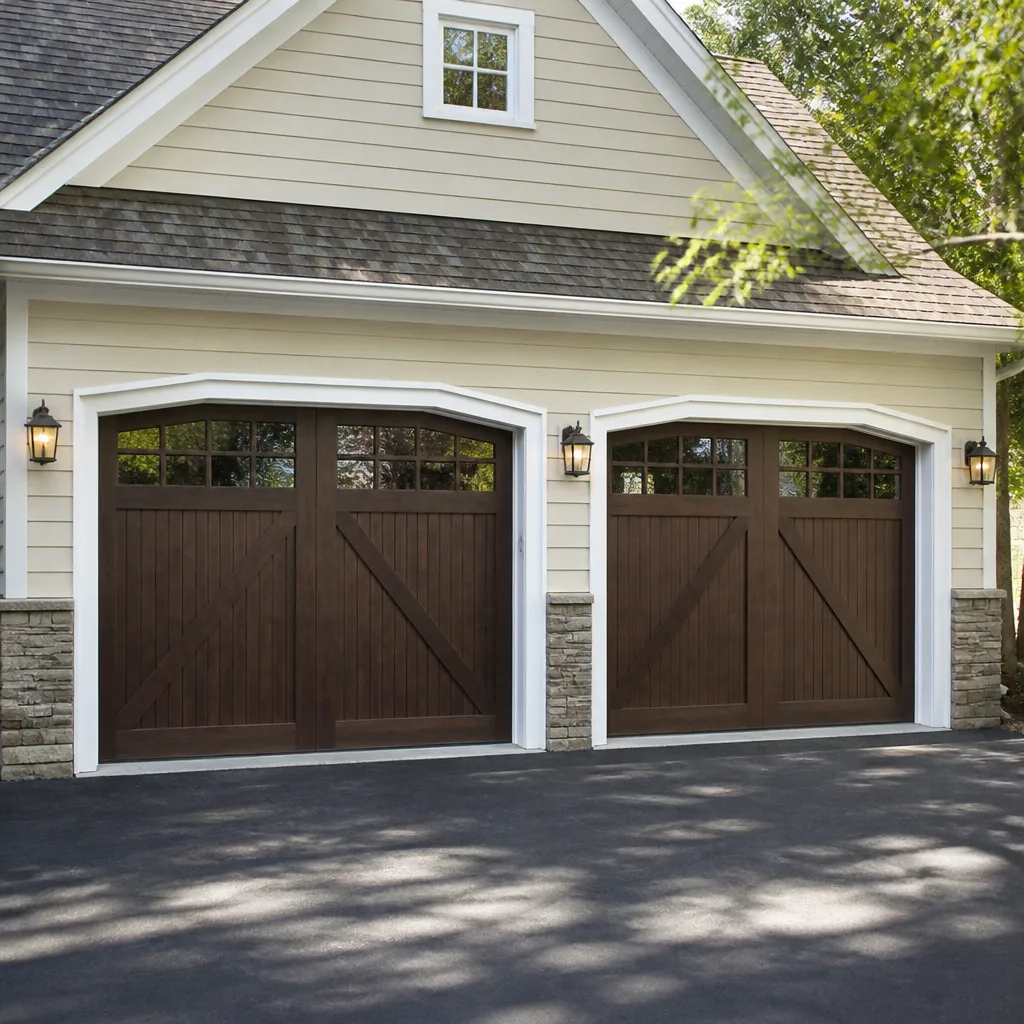 Carriage house
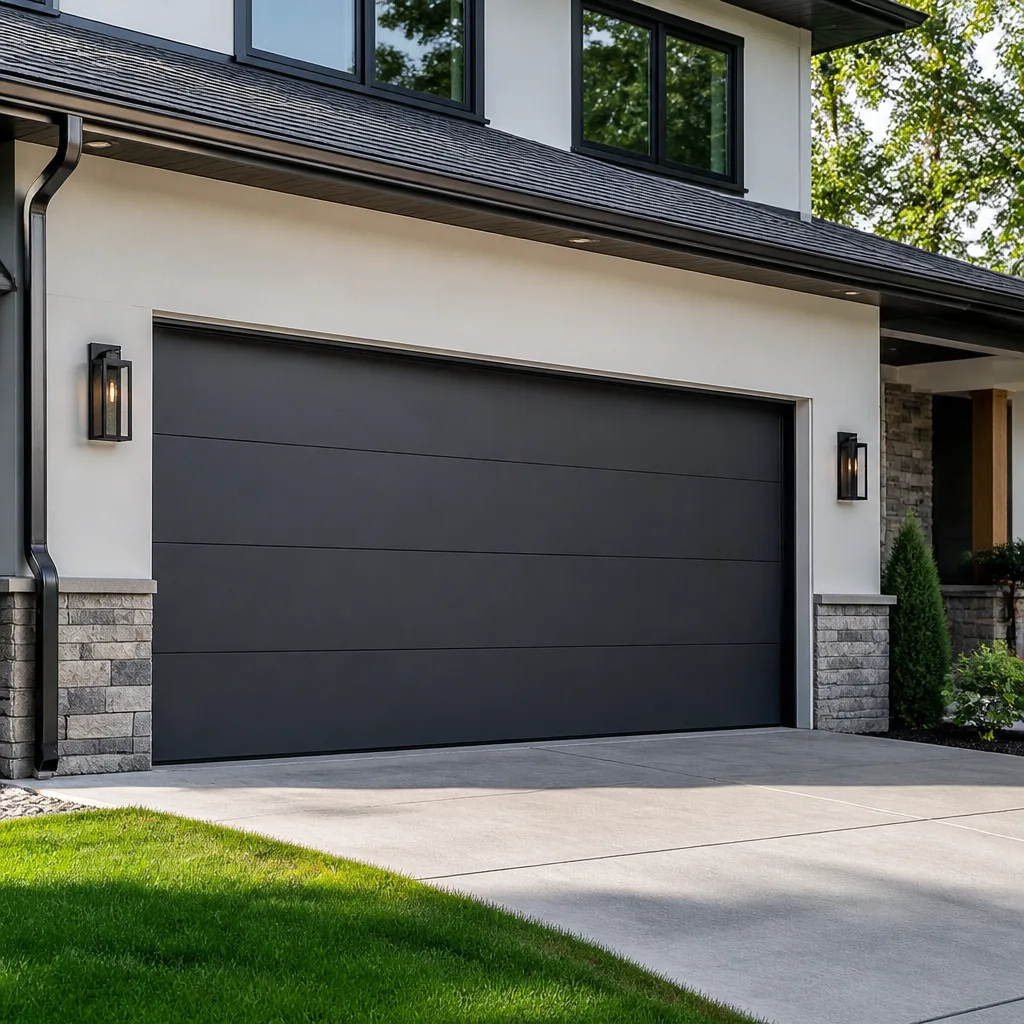 Modern flush
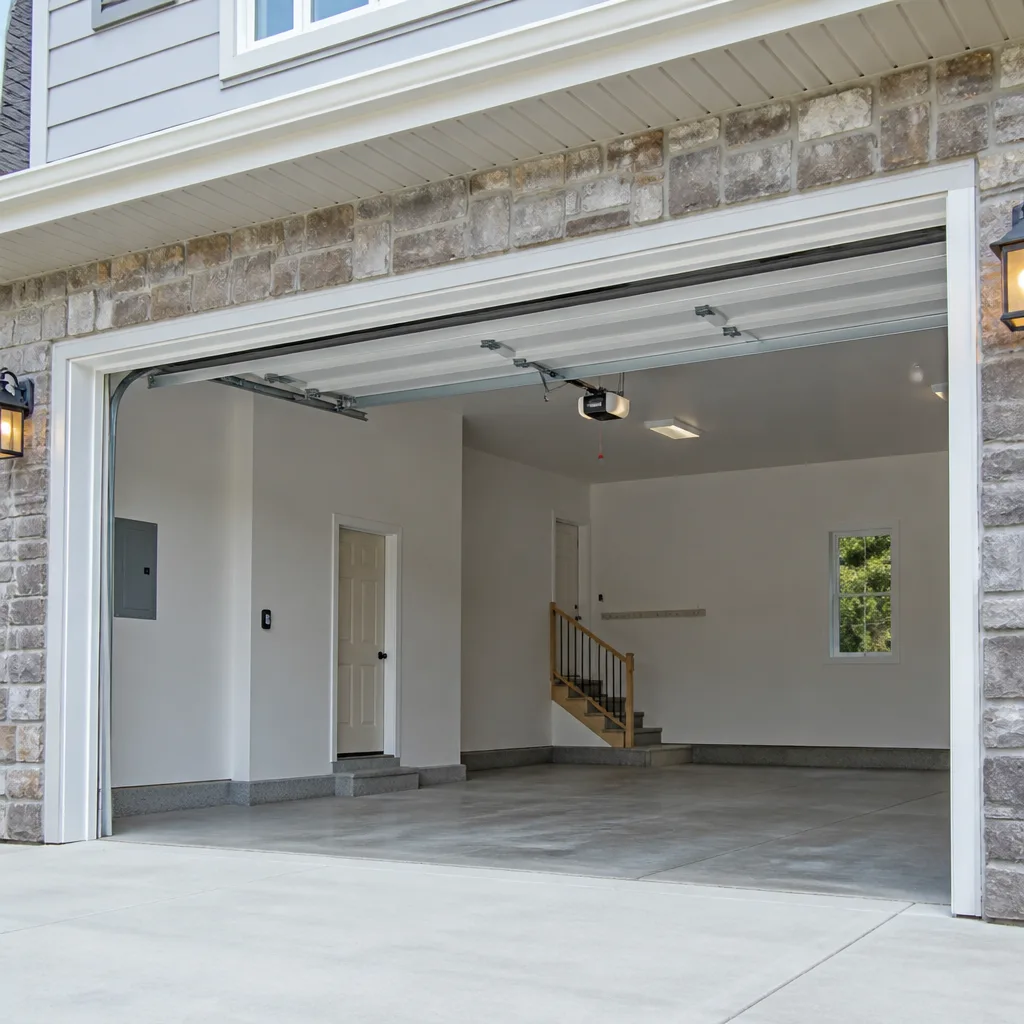 LiftMaster openers
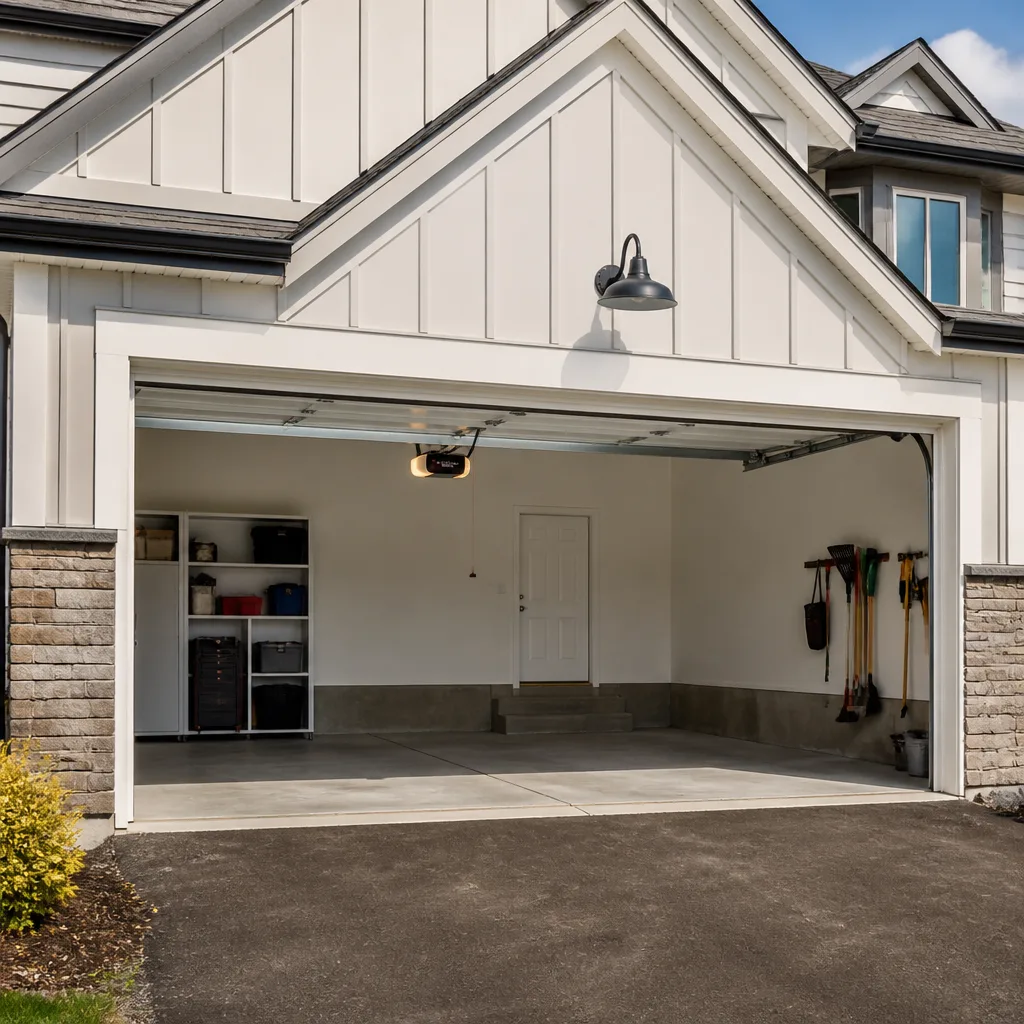 Chamberlain openers
Full 25-point door and opener safety check with every visit - springs, cables, rollers, tracks, and your LiftMaster or Chamberlain opener included
You get a price before we start. It does not change when the pro arrives.
Get your free estimateSeasonal Garage Door Care for Soundview: Year-Round Homeowner’s Guide
The garage door problem that ruins a January morning almost always has roots in something that was borderline in October. Cold doesn’t break doors – it exposes what was already weakening. A seal that was starting to harden, a hinge that had picked up a little play, a spring that had been working a touch harder every week since summer. By the time the temperature drops into the twenties, those small compromises turn into a door that won’t close, a motor that strains, or a cable that finally lets go.
This guide walks through how a garage door actually behaves through a Soundview year, season by season, and what to check before each transition so the emergency call never has to happen. You’ll learn the specific failure modes each season brings here, the signs that a door is heading toward trouble, and the jobs that should always go to a technician.
Quick Answer
Seasonal garage door care in Soundview means inspecting weatherstripping and hardware before the first freeze, watching opener performance as temperatures drop, checking the frame and tracks after winter freeze-thaw cycles, and looking for heat warping on vinyl and aluminum doors through summer. Most of this is visual inspection a homeowner can do in fifteen minutes per season; spring tension adjustments and anything involving cables belong to a trained technician.
Styles & brands we work with
- Raised-panel steel
- Carriage house
- Modern flush
- Full-view glass
- LiftMaster openers
- Chamberlain openers
Table of Contents
- Why Soundview’s Seasons Stress a Garage Door More Than You’d Think
- Fall Prep: What to Inspect Before the First Freeze
- How Cold Weather Affects Your Opener Motor
- Winter: What’s Normal and What Needs a Call
- Spring Post-Winter Inspection: Frame, Tracks, and Hardware
- Summer Heat and Sun: Vinyl and Aluminum Door Behavior
- Seasonal Spring Tension: Why This Is a Technician’s Job
- Your Year-Round Soundview Garage Door Schedule
Why Soundview’s Seasons Stress a Garage Door More Than You’d Think
A garage door is a machine that lives outdoors but is expected to work like an indoor appliance. In Soundview, that machine sits through a full range of conditions each year: humid summers, wet autumns, hard freezes, and the repeated thaw-and-refreeze cycles that come with a New York winter. Each of those conditions attacks a different part of the door.
Rubber seals harden and crack in the cold. Wood frames swell with moisture and shrink again when it dries. Steel panels expand in direct summer sun and contract overnight. Springs, which carry the entire weight of the door, work against all of it. None of these changes happen dramatically. They accumulate quietly, one season at a time, until a door that “always worked fine” suddenly doesn’t.
That’s the core idea behind seasonal care in Soundview: you’re not fixing problems, you’re catching them while they’re still cheap and small. A worn bottom seal is an inexpensive part. A door that’s been slamming against a hardened seal for two winters can end up with bent panels, a strained opener, and a frame that’s shifted just enough to throw the tracks out of alignment. The difference between those two outcomes is usually one inspection in the fall.
Garage doors are all we do, and that focus shapes how we think about this. We’re not generalists who occasionally hang a door. Every technician who works on your door works only on garage doors, and knows how a LiftMaster or a Chamberlain opener behaves when the temperature drops, and how a Clopay steel door responds to a Soundview winter. Seasonal patterns are the same every year. The doors that get through them cleanly are the ones someone was paying attention to.
Fall Prep: What to Inspect Before the First Freeze
Fall is the most important season for garage door care in Soundview, and weatherstripping is where it starts. The bottom seal and the perimeter seals around the door frame are what keep cold air, water, and pests out. When they’re soft and pliable, they do their job quietly. When they harden with age, they stop sealing and start transferring force into the door itself every time it closes.
Walk around your closed door and look at the rubber strip along the bottom. It should press against the floor with a light, even contact. If you can see daylight underneath, if the seal looks cracked or flattened, or if it has hardened to the point where it doesn’t spring back when you press it, it’s due for replacement before the cold sets in. Do the same along the sides and top, checking for gaps, tears, or sections that have pulled away from the frame.
Then work through the rest of the fall checklist:
- Test the door balance. Disconnect the opener and lift the door halfway by hand. It should stay put. If it drifts down or feels heavy, the springs are losing tension and should be looked at by a technician.
- Check the hardware. Look at hinges, rollers, and the bracket plates along the tracks. Loose bolts are common after a summer of use and are easy to tighten with a socket wrench. Look for rollers that are cracked, flat-spotted, or worn.
- Lubricate moving parts. A garage-door-specific lubricant on hinges, rollers, and the spring (never grease on the tracks themselves) keeps everything moving smoothly as temperatures fall.
- Clear the tracks. Debris, leaves, and built-up grime in the tracks cause the door to bind. Wipe them down and check that they’re straight and evenly spaced.
- Test the safety reversal. Put a roll of paper towels under the closing door. It should reverse on contact. This is a safety feature and it should be checked every season.
In Soundview, fall also brings wet weather before the freeze. Water that gets past a worn seal and then freezes can crack concrete at the door’s threshold and stress the bottom panel. Getting the seal right before the first hard freeze is the single highest-value thing a homeowner can do in October.
How Cold Weather Affects Your Opener Motor
Garage door openers are rated for cold, but they don’t perform identically at every temperature. As the mercury drops in Soundview, the grease inside the opener’s gearbox thickens, the door’s metal parts stiffen, and the springs lose a small amount of their lifting force. The motor has to work harder to move the same door, and that extra effort shows up as strain, noise, and sometimes a door that stops halfway.
The threshold that matters most is around freezing. Above it, most openers run close to normal. Below it, and especially in the teens and single digits, the combination of stiff grease and heavier door load can push a motor that was already marginal into failure. A LiftMaster or Chamberlain unit that’s been quietly running near its capacity through the summer will often be the one that quits on the coldest morning of the year.
What to watch for as temperatures fall:
- Slower movement. If the door opens or closes noticeably more slowly in cold weather than it did in summer, the motor is working harder than it should. Sometimes that’s the cold. Sometimes it’s a sign the opener is near the end of its life.
- Straining sounds. A grinding, humming, or laboring noise that wasn’t there in warmer months is the motor telling you something. Don’t ignore it and hope it clears up. It rarely does.
- Partial movement or reversal. A door that goes up partway and stops, or reverses for no apparent reason, is a safety system responding to resistance. That resistance might be a stiff spring, a binding track, or a failing motor.
- Remote and wall control issues. Cold can affect the battery in remotes and the sensitivity of wall controls. If the door works from the wall but not the remote, start with the battery.
If your door is only opening partway and stopping, that’s one of the most common winter calls we get. Sometimes the fix is straightforward, and sometimes the opener needs attention. If you’re dealing with that now, garage door opener repair is the place to start rather than trying to force the door up manually.
Winter: What’s Normal and What Needs a Call
Some winter behavior is completely normal. A door that sounds a little louder in January than it did in September is not necessarily a problem. Cold metal contracts, grease thickens, and the whole assembly is stiffer. A slightly noisier door that still opens and closes smoothly and completely is doing what it’s supposed to do.
Other winter symptoms mean it’s time to call. The clearest ones:
- The door won’t open at all, or the opener runs but the door doesn’t move.
- The door moves unevenly, with one side rising faster than the other.
- You hear a loud snap from inside the garage and the door becomes very heavy or won’t lift. That’s typically a broken spring, and it’s not something to test or work around. A door with a broken spring should stay closed until a technician gets to it.
- The door reverses immediately after touching the floor, or won’t close fully.
- The door has come off one of its tracks or is visibly crooked in the opening.
Winter is also when emergency calls matter most, because a garage door that won’t close leaves the house exposed. When it can’t wait, that’s exactly what our emergency service is for. It’s a core part of what we do, not an add-on, and a Soundview homeowner with a door stuck open in freezing weather doesn’t have to wait for a standard appointment slot. You can call us at (866) 690-8121 and we’ll get a technician out to assess it.
What you should not do in the meantime is try to force a stuck door, disconnect the opener and lift a heavy door by hand, or attempt to adjust anything under tension. Those are the situations where homeowners get hurt. A door that’s stuck is an inconvenience. A door that’s been forced and then comes down unexpectedly is a serious hazard.
Spring Post-Winter Inspection: Frame, Tracks, and Hardware
Spring in Soundview is where the winter’s damage shows up. Repeated freeze-thaw cycles are hard on a garage door frame. Moisture gets into small gaps, freezes, expands, and thaws, and over a season that movement can shift the frame just enough to throw the door’s alignment off. The door itself can also be affected, with panels that have developed small bends or hardware that’s worked loose from the constant expansion and contraction.
Here’s how to assess your door after winter, in order:
- Look at the door from outside, closed. The bottom edge should sit parallel to the floor. If one side looks higher than the other, or the door looks crooked in the opening, the frame or the springs need attention.
- Check the tracks for straightness. Run your hand along each track (carefully, with the door closed and the opener disconnected). Tracks should be straight and evenly spaced. A track that’s bent or pushed out of alignment will cause the door to bind and eventually come off the track.
- Look at the frame around the opening. Any cracking, gaps at the corners, or signs the wood has swelled and shrunk unevenly are worth noting. A frame that’s shifted can cause the door to rub against the trim as it moves.
- Check the hardware for looseness. Bolts that held tight in fall can work loose over a winter of freezing and thawing. A socket wrench and a few minutes are usually all that’s needed.
- Test the balance again. A door that balanced easily in October but now feels heavy or drifts down has springs that have lost tension.
- Check the seals again. Winter is hard on rubber. A seal that was fine in the fall can be cracked and hard by spring, and those cracks let water in during spring rain.
If any of this turns up a problem, especially anything with the springs, tracks, or frame, it’s a job for a specialist. A door that’s misaligned or running on compromised springs is under real load, and it’s not a good candidate for homeowner repair. When you need a proper assessment, garage door repair covers exactly this kind of post-winter assessment and correction.
Summer Heat and Sun: Vinyl and Aluminum Door Behavior
Summer in Soundview brings a different problem: direct sun on doors that face south or west. Vinyl and aluminum doors are common on residential garages here, and both materials respond to heat, though not in the same way.
Vinyl is the more sensitive of the two. It expands as it warms, and on a door with panels that are fully exposed to afternoon sun, that expansion can create visible bowing or waviness, especially on larger panels. Most of this is cosmetic. A door that looks slightly uneven in July but returns to normal in cooler weather is doing what vinyl does. The problem starts when the warping is persistent, when panels stay bowed after sunset, or when the door stops sealing properly because the bottom edge has lifted. Warping that changes the way the door meets the frame is structural, not cosmetic, and needs to be looked at.
Aluminum is more heat-stable, but it’s prone to a different issue: thermal expansion along the length of the panels and at the points where they attach to the frame. Fasteners can work slightly loose over repeated heat cycles, and you may notice small gaps opening along panel seams through summer. Those are worth checking each year, because a door that’s losing its integrity at the seams will only get worse.
What to check through summer:
- Look at the door at the hottest part of the afternoon and again after sunset. Persistent warping that doesn’t relax with cooler temperatures is worth investigating.
- Check that all panels still meet tightly along their seams and that no fasteners have worked loose.
- Listen for new rattles or uneven sounds as the door opens and closes. Heat expansion can cause components to fit differently than they did in cooler weather.
- Make sure the door still seals against the frame. A warped door that leaves a gap at the bottom lets hot air, insects, and water in.
Doors that are consistently exposed to sun and heat are also the ones that wear their finish faster. A Raynor or Craftsman door with a failing finish can look worse than a well-maintained door twice its age. If you’re weighing repair versus replacement for a door that’s been through a long stretch of Soundview summers, garage door installation is worth a conversation with a specialist who can be honest about whether the current door is still working well.
Seasonal Spring Tension: Why This Is a Technician’s Job
Here’s where we have to be direct with you: adjusting or replacing a torsion spring is not a homeowner task. It’s the single most dangerous job in garage door work, and it’s one we take seriously enough that we don’t recommend any homeowner try it, regardless of what a video tutorial shows.
Here’s why. A torsion spring holds the full weight of the door under significant tension. That tension is what makes the door easy to lift by hand. When you’re working on the spring, you’re working against all of that stored energy. The tools involved (winding bars) are your only interface with the stored tension, and if the spring slips while you’re winding or unwinding, the release is fast, violent, and can cause serious injury. There’s also the risk of the door coming down under its own weight if the spring is partially released. The risk isn’t theoretical. It’s why spring repair is one of the jobs that many general handymen decline or subcontract out.
That’s also why we treat spring repair as a core part of what we do. Our technicians know how to work with torsion springs safely and correctly, which is the only way this job should be done. Spring replacement done safely means:
- The correct spring is matched to your door’s weight and height, not guessed at.
- Both springs are replaced as a matched pair when one has failed, so the door is balanced evenly and the partner spring isn’t forced to carry the whole load.
- The tension is set and verified so the door balances correctly and the door and opener work together smoothly.
- The whole assembly, including cables and drums, is checked at the same time.
If you hear a snap or your door suddenly becomes very hard to lift, the door should stay closed and the spring should be left alone until a technician arrives. You can call us at (866) 690-8121 to schedule a spring assessment. In Soundview, a broken spring in cold weather is one of the most common calls we get, and it’s not something to work around.
For the broader repair picture, garage door repair is where to start for anything beyond an inspection. And if you ever need to know what a repair is likely to involve, we’ll always tell you what’s going on with your door before we start any work.
Your Year-Round Soundview Garage Door Schedule
Here’s a simple way to sequence all of this through the year. None of these are difficult, and most are inspections rather than repairs. The point is to check at the right moments, because that’s when the small problems are still small.
- Early fall (before the first freeze): Inspect and replace weatherstripping. Test the door balance. Tighten loose hardware. Lubricate hinges and rollers. Clear the tracks. This is the most important inspection of the year in Soundview.
- Late fall (as temperatures drop): Pay attention to how your opener sounds and moves. If it’s getting slower or louder, note it and have it checked before the deep cold. If your opener is older or already marginal, replacement may be more cost-effective than repair. LiftMaster and Chamberlain openers are common here, and they’re straightforward to evaluate and replace.
- Winter: Watch for anything that goes beyond the normal cold-weather stiffness. A door that won’t close, a snap from the spring, or any visible misalignment in the tracks means a call.
- Spring (after the last freeze): Inspect the frame, tracks, and hardware for freeze-thaw damage. Test the balance again. Check the seals. This is when winter’s effects become visible.
- Summer: Check vinyl and aluminum doors for warping that persists after sunset. Look at seams, fasteners, and the door’s fit in the frame. Clear any debris the weather has brought in.
- Year-round: Test the safety reversal and check the battery in your remotes at least once a season. Keep the tracks clean and the moving parts lubricated.
Common Mistakes to Avoid
- Skipping the fall inspection because “it worked fine last winter.” The door that survives one winter on aging seals and tired springs is the one that strands someone the next winter. That’s exactly the pattern we see in Soundview – the problem compounds quietly, then fails all at once.
- Trying to adjust the springs yourself. The stored energy in a torsion spring is dangerous, and the tools and knowledge involved aren’t homeowner-grade. This is one of the few places we’ll firmly say leave it alone.
- Greasing the tracks. The tracks are meant to be clean and dry. Grease attracts grit, which builds up and causes binding. Lubricant belongs on the hinges, rollers, and spring (with a garage-door-specific product), not on the tracks themselves.
- Assuming a noisy door is just an old door. A door that’s gotten progressively louder is telling you something. Sometimes it’s a loose bolt, sometimes it’s a worn roller, and sometimes it’s a sign the opener is straining. Get it checked instead of turning up the radio.
- Forcing a door that won’t close. If the door won’t close, the issue is usually the safety system or the track, and forcing it can do real damage. Stop and call.
- Replacing one spring when both are the same age. Springs work as a pair. Replacing just the failed one leaves the other carrying load it wasn’t rated for, and it usually fails soon after. Matched-pair replacement is standard practice.
- Ignoring summer warping. Cosmetic warping that relaxes in the evening is fine. Warping that doesn’t relax, or that leaves gaps at the door’s edges, means the door is losing its shape and needs an assessment.
See the difference
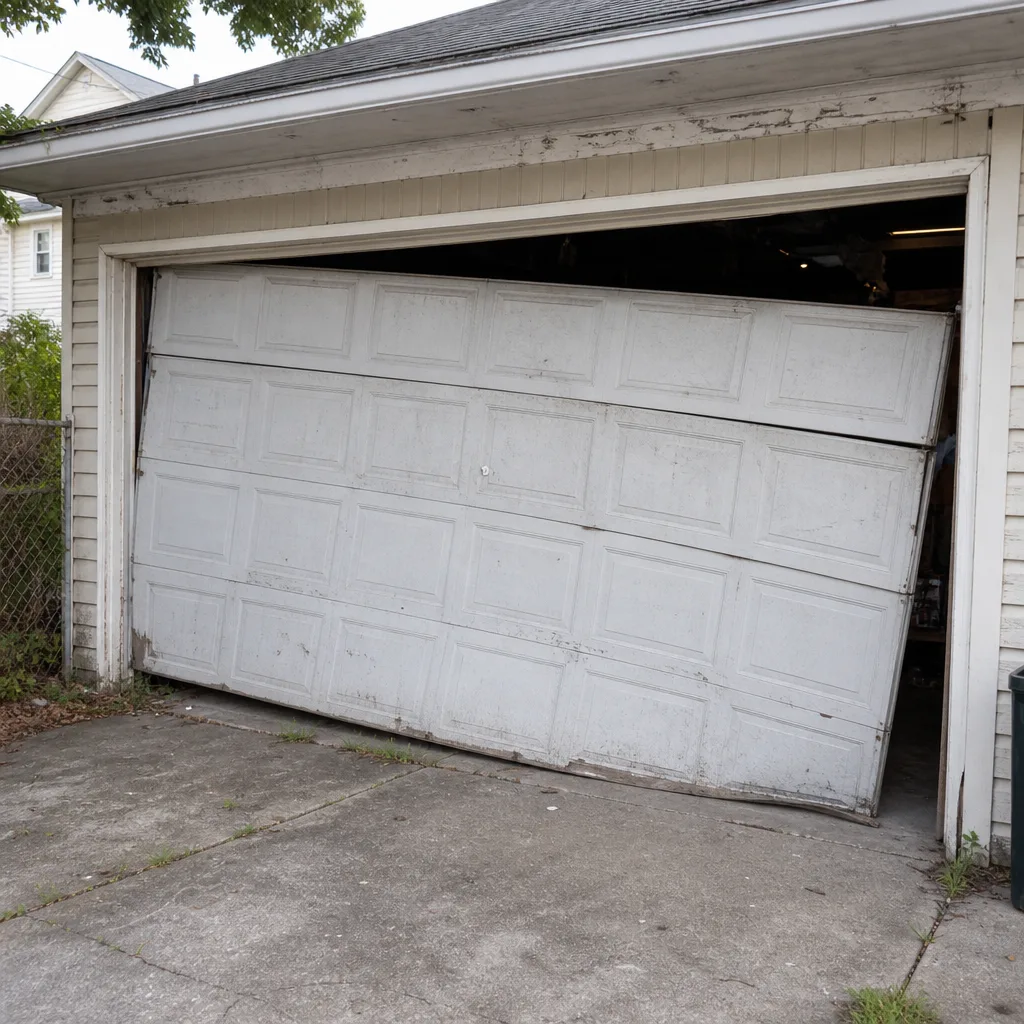 Before
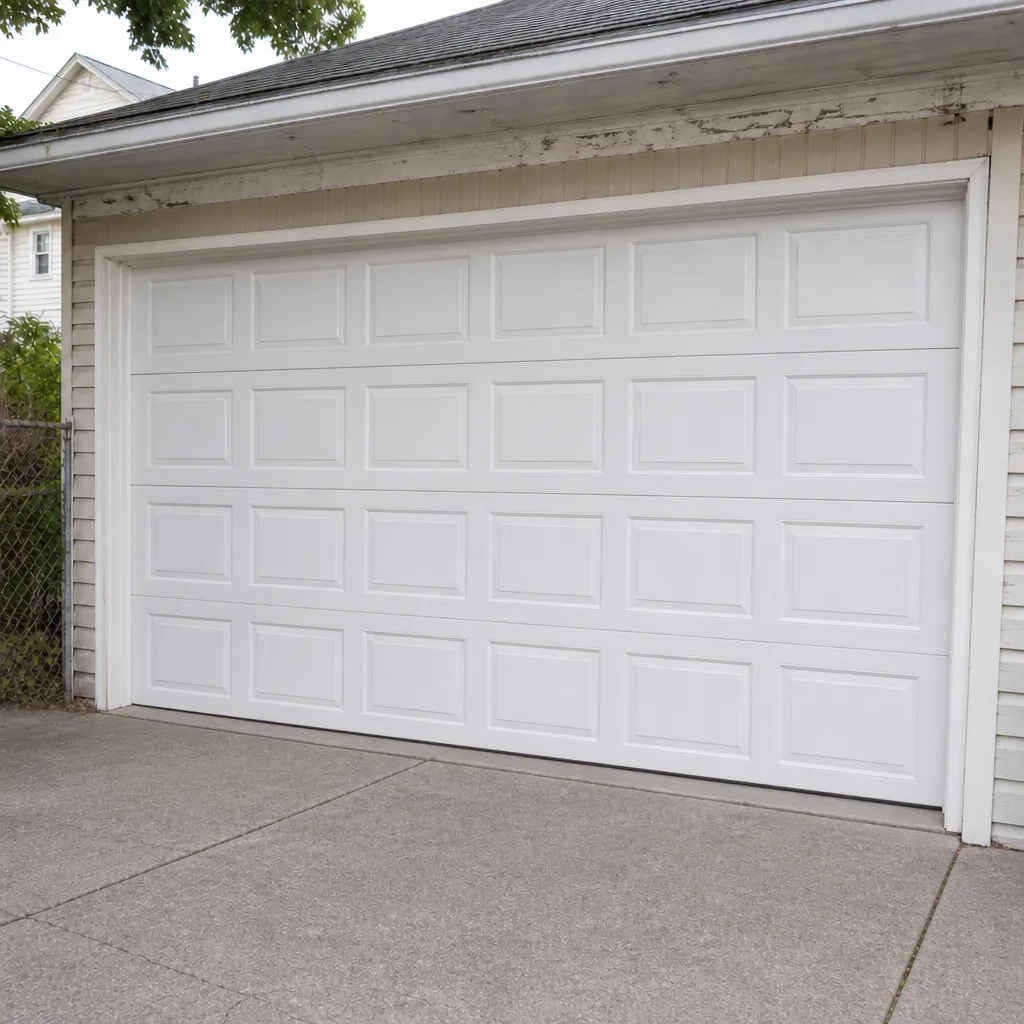 After
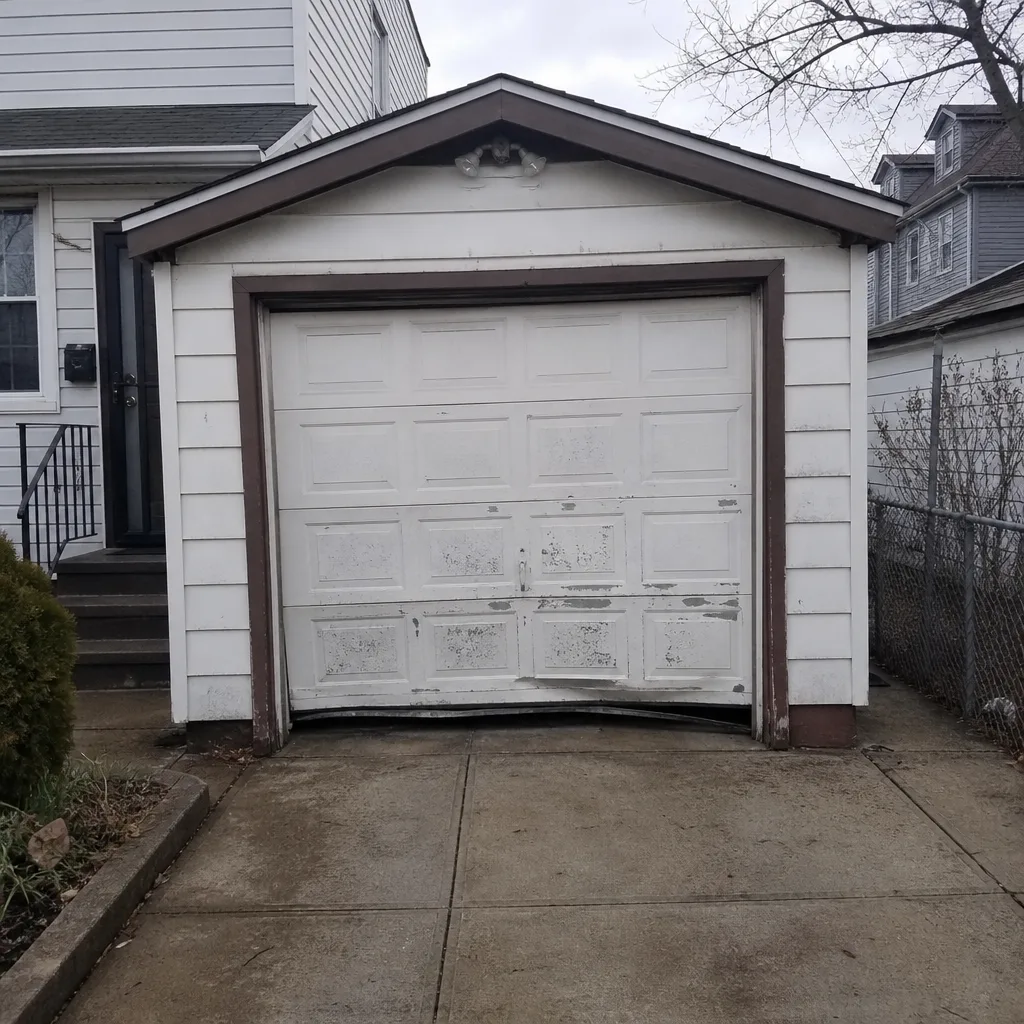 Before
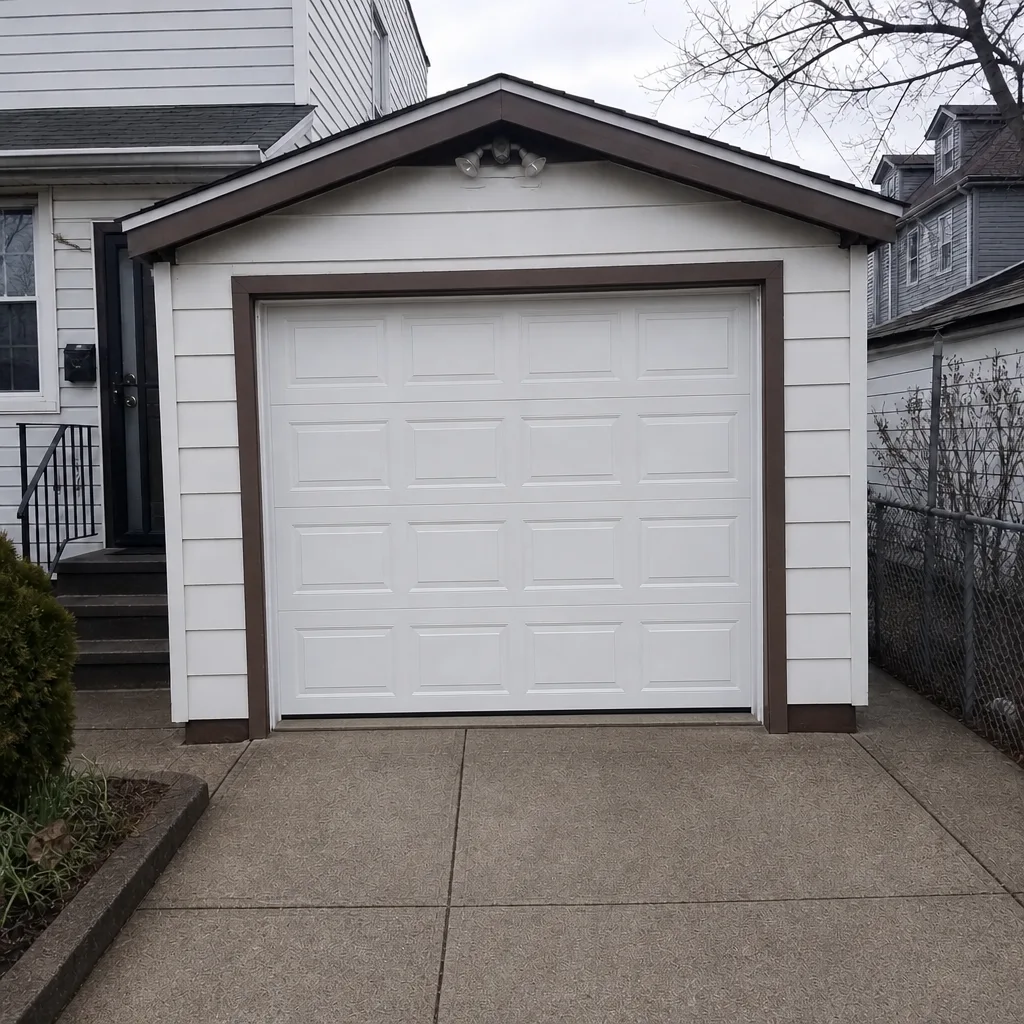 After
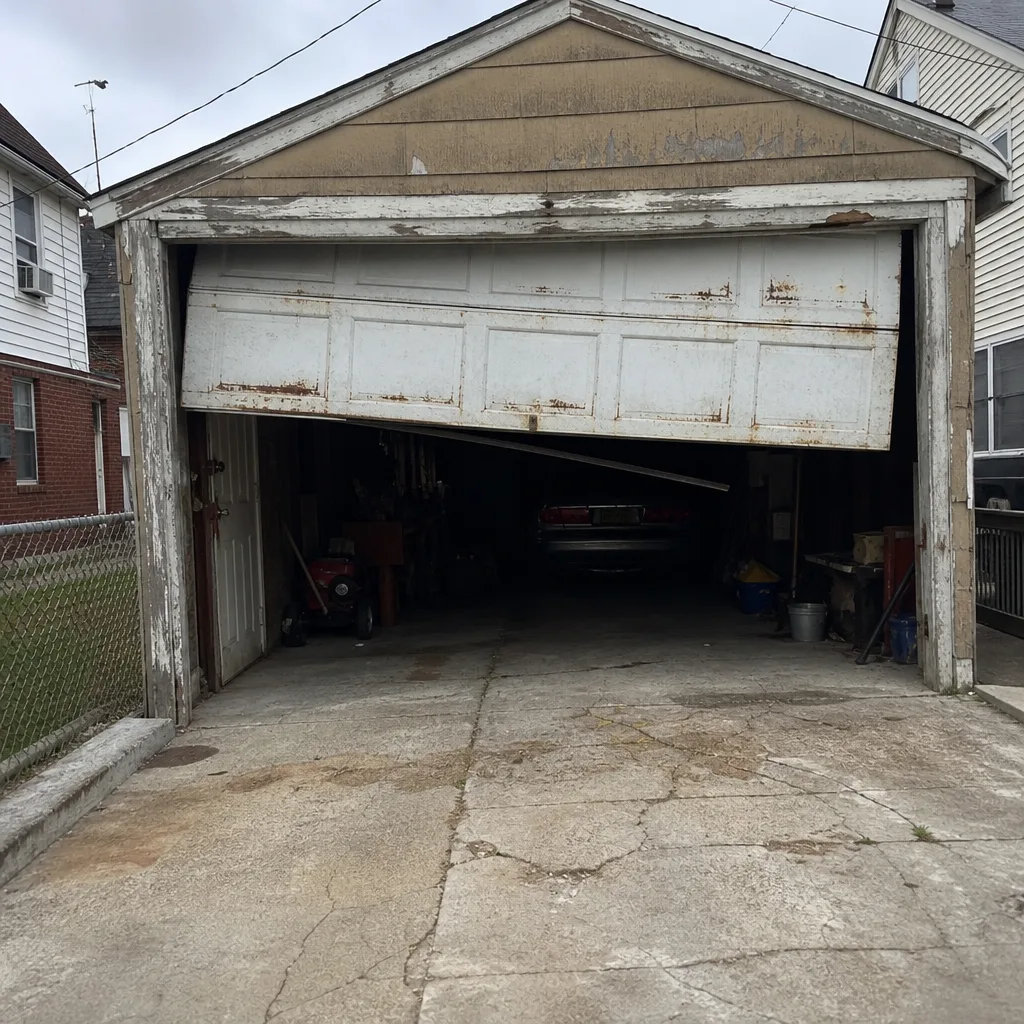 Before
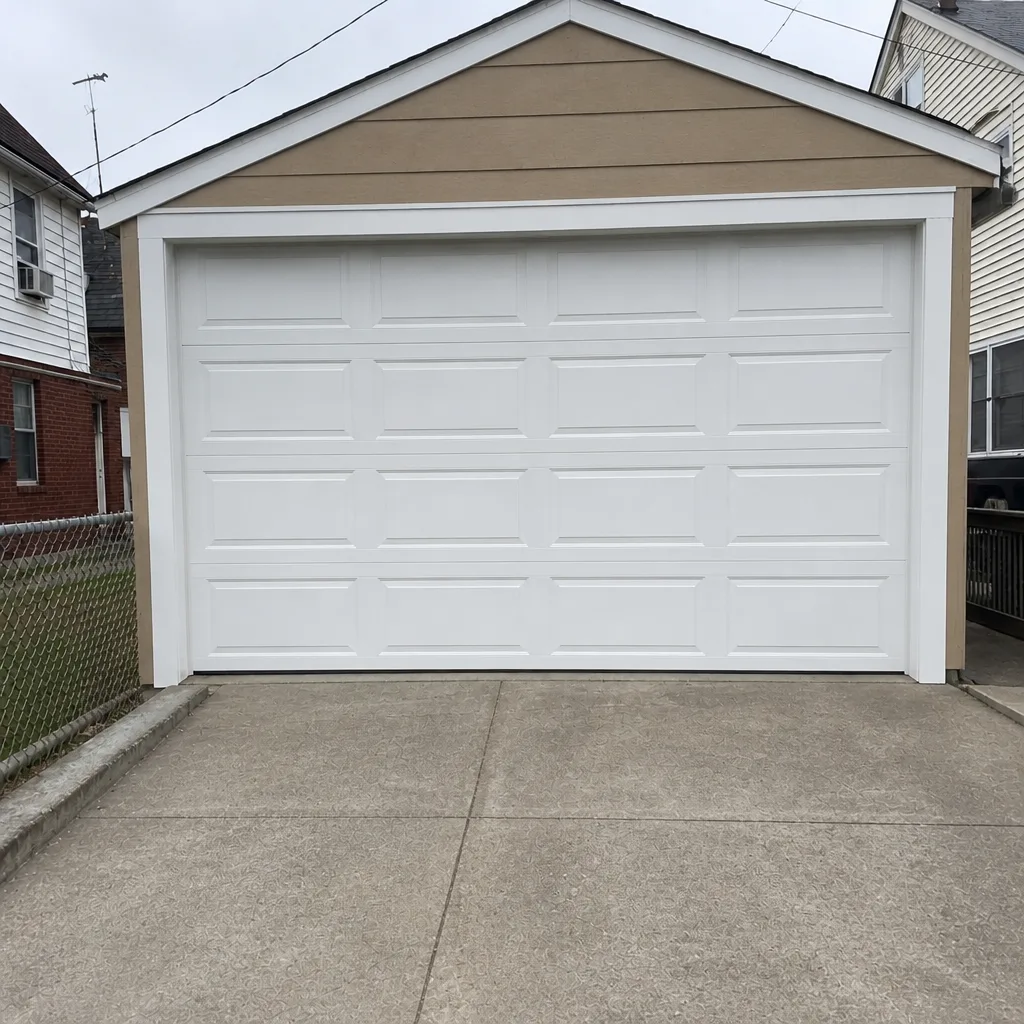 After
When to Call a Professional
Some of this is a homeowner’s work: visual inspections, tightening bolts, cleaning tracks, checking remotes, and replacing a worn weather seal. Call a professional when you’re out of that territory. Specifically:
- Any sign of a broken spring, including a loud snap or a door that’s suddenly very heavy.
- A door that won’t open or close, especially if it’s stuck and you’re exposed to the weather.
- A door that’s come off its track or looks visibly crooked.
- A frame or track that’s bent, misaligned, or affecting how the door runs.
- An opener that’s straining, failing to complete its cycle, or showing signs of age.
- Persistent warping on vinyl or aluminum doors that changes how the door seals.
We know this list is specific because we work on these problems constantly. Our technicians have up to 12 years of experience, and every job we do is a garage door job. If you’re in Soundview and you’re not sure whether something is worth a call, we’re happy to look at it. Garage Door Repair Soundview offers free estimates in Soundview – call (866) 690-8121. If it’s an emergency, call the same number and we’ll prioritize getting a technician out.
Frequently Asked Questions
Inspect your garage door at least once each season, with the most important inspection in early fall before the first freeze. In Soundview, the transition from fall into winter is where most preventable problems start, so the fall inspection is the one to prioritize if you only do one. Seasonal checks catch small issues before they become expensive ones.
No. Torsion springs hold the full weight of the door under significant tension, and adjusting them requires specialized tools and training. An amateur attempt at spring adjustment is a genuine injury risk, and a spring that releases unexpectedly can also cause the door to come down. Spring work should always be done by a trained technician. Call (866) 690-8121 if you need spring repair.
Cold weather thickens the grease in your opener, stiffens the door’s moving parts, and reduces the spring’s lifting force, so the motor has to work harder. A slightly slower door in cold weather is normal. A door that’s dramatically slower, sounds like it’s straining, or stops partway through its cycle is telling you something needs attention. In Soundview, opener strain in winter is a common call.
Some temporary warping in direct summer sun is normal for vinyl doors, and it typically relaxes as the door cools in the evening. Warping that doesn’t relax, that leaves gaps at the door’s edges, or that stops the door from sealing properly is not just cosmetic and should be assessed. Persistent warping affects how the door performs and how long it will last.
We quote the work before it starts, based on what we find when we assess your door. If the assessment turns up something different from what you described, we’ll talk through the options and the costs before starting any work. You’ll know what the job involves and what it costs before we begin, and the written estimate sets the final price.
Emergency service is a core part of what we do, so call us at (866) 690-8121 and we’ll get you scheduled as quickly as we can. A door that won’t close leaves your home exposed, and in cold weather especially, that’s a priority. We don’t recommend forcing the door or trying to work around the problem while you wait. Call us and we’ll take it from there.
The Bottom Line
Garage door care in Soundview comes down to knowing the seasons and checking at the transitions. Fall is the critical inspection: weatherstripping, hardware, balance, and seals, all before the first freeze. Winter calls for attention to your opener’s performance and a call the moment something sounds or behaves beyond normal cold-weather stiffness. Spring is about post-winter assessment of the frame, tracks, and seals. Summer is for watching vinyl and aluminum doors for heat warping that doesn’t relax. Do the inspections yourself; leave spring work, cable work, and repair to a technician. If you need help at any point in the year, Garage Door Repair Soundview is a single call away, and estimates are free. Call (866) 690-8121 for a free estimate.
Written by the team at Garage Door Repair Soundview.