Last updated November 21, 2026
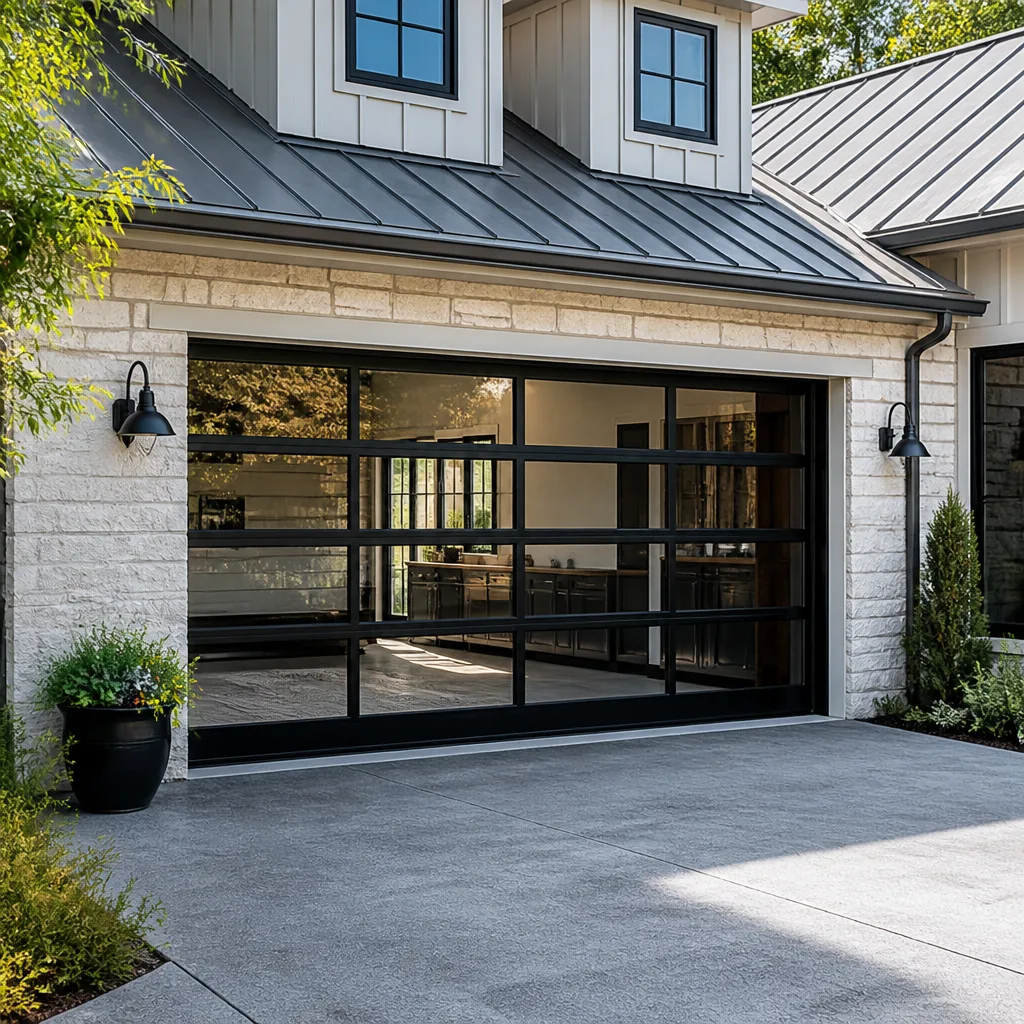 Full-view glass
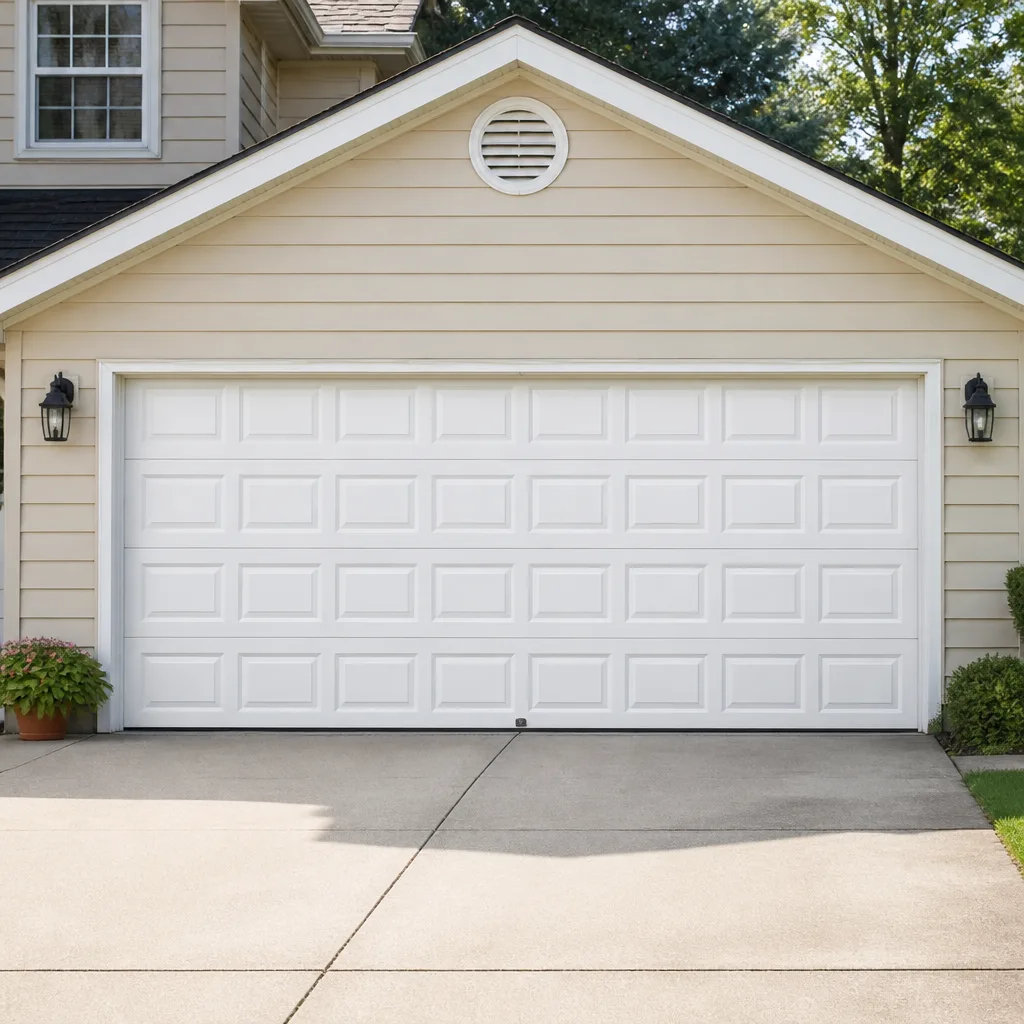 Raised-panel steel
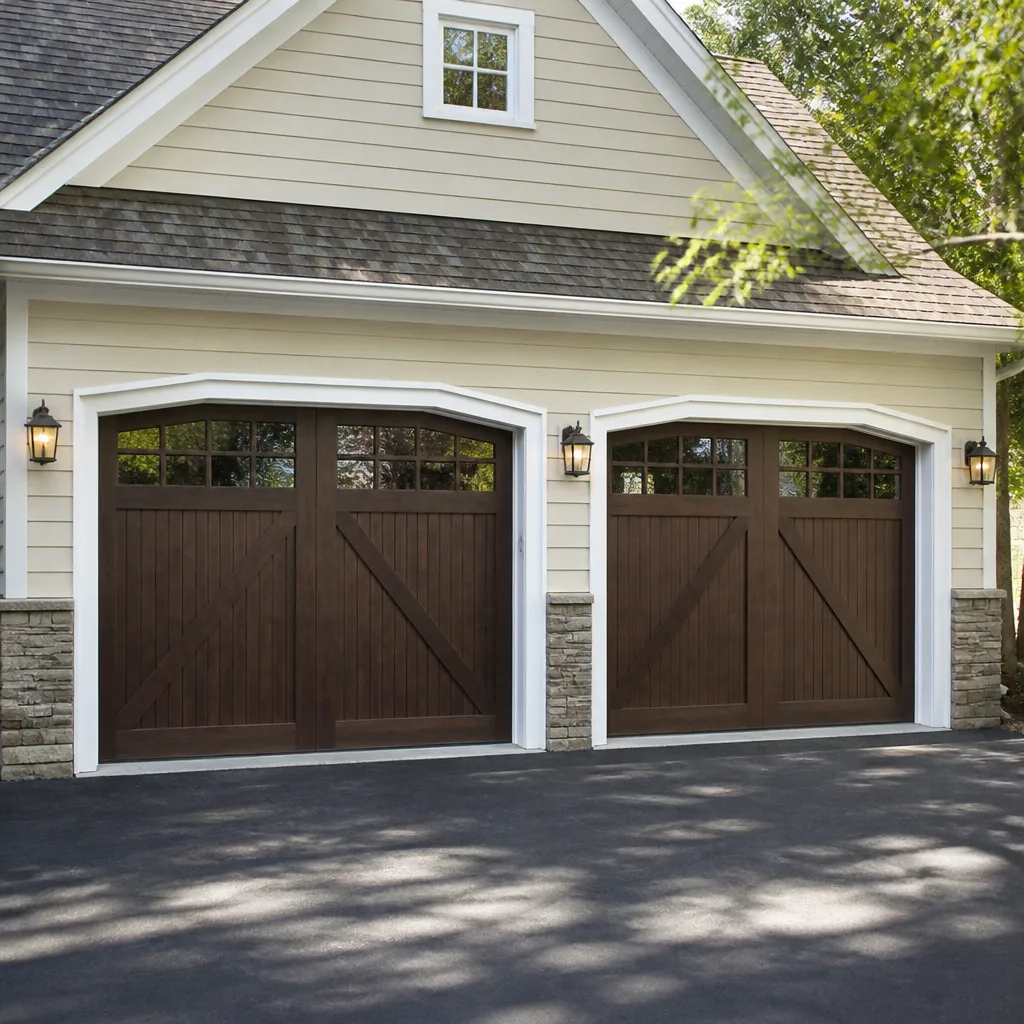 Carriage house
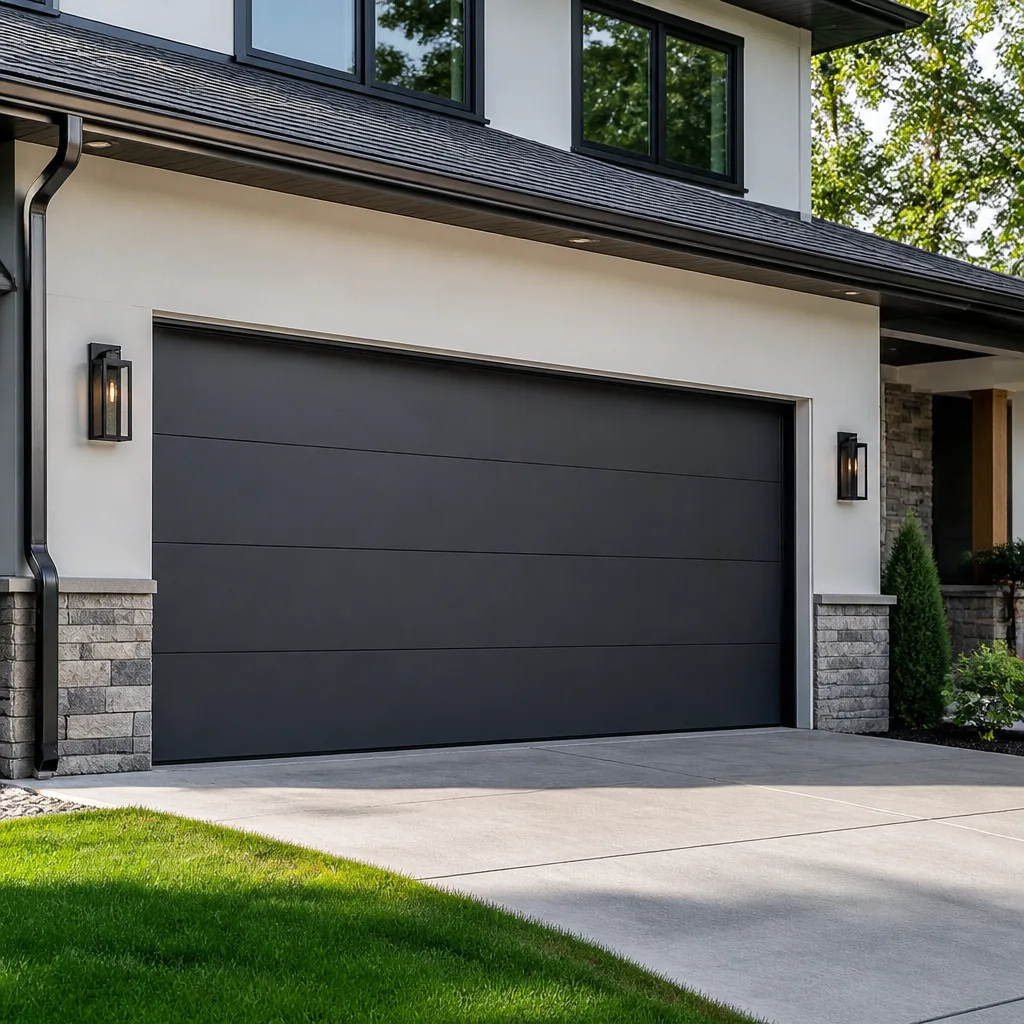 Modern flush
 LiftMaster openers
 Chamberlain openers
Full 25-point door and opener safety check with every visit - springs, cables, rollers, tracks, and your LiftMaster or Chamberlain opener included
You get a price before we start. It does not change when the pro arrives.
Get your free estimateGarage Door Permits, Codes & Inspections in Soundview, NY: What You Need to Know
Most Soundview homeowners assume that swapping a garage door is just maintenance. New panels go up, the old ones go to the curb, and nobody thinks about paperwork. That assumption is where trouble starts. A garage door replaced without the right permit in New York City doesn’t just risk a fine. It can create a record problem that surfaces at the worst possible moment: during a home sale, or in the middle of an insurance claim after a storm. The rules in the Bronx aren’t all-or-nothing, though. Some door work is routine maintenance that needs nothing. Other work does trigger the New York City Department of Buildings. This guide walks through where that line falls, how fire-rated doors in attached garages change the picture, what an inspection actually covers, and how to handle work a previous owner did without permits. We write it as a garage door specialist working in Soundview, because these questions come up on real jobs.
Quick Answer
In Soundview and across the Bronx, replacing a garage door with a like-for-like unit of the same size, same material, and same fire rating is usually treated as maintenance and doesn’t need a DOB permit. Changing the size of the opening, altering the structure around it, converting a garage to another use, or installing a door that changes the fire rating of an attached garage typically does require a permit and inspection. The only reliable answer for your address is the one from the NYC Department of Buildings or a licensed filing professional, so treat this as orientation, not a ruling.
Styles & brands we work with
- Raised-panel steel
- Carriage house
- Modern flush
- Full-view glass
- LiftMaster openers
- Chamberlain openers
Table of Contents
- When does a garage door replacement need a NYC DOB permit?
- Fire-rated garage doors in attached garages: the rule many Soundview homeowners miss
- What a garage door inspection actually covers
- How to prepare so your inspection passes the first time
- What to do about unpermitted work from a previous owner
- The insurance angle: why the paper trail matters
- Selling a Soundview home with garage door work on record
- Who does what: the homeowner, the door specialist, the filing professional
When does a garage door replacement need a NYC DOB permit?
The New York City Department of Buildings (DOB) cares less about the door itself and more about what the door does to the building. A straight replacement of a worn door with an identical one, same opening, same dimensions, same material, same rating, is generally considered repair and maintenance. Nothing structural moves. Nothing about the building’s envelope or fire separation changes. In those cases, a permit usually isn’t part of the conversation.
Where it tips over into permit territory is when the job changes the building in some measurable way. Common triggers we see discussed on Soundview jobs include:
- Enlarging or reshaping the opening – widening the garage doorway or altering the header means cutting into structure, which requires plans and a filing.
- Changing the door’s fire rating – a door rated for fire separation replaced with an unrated one is a life-safety change, not a cosmetic one.
- Converting the garage – turning a garage into living space or a storage room changes the use of the space and pulls in a different set of rules.
- Adding or replacing the structural frame – new framing around the opening is structural work.
- Switching door type in a way that changes load or operation – for instance, moving from a manual single door to a much heavier sectional with a different track layout.
It’s worth saying plainly: this is a general orientation, not the last word. The DOB makes the call, and its current rules and interpretations are what count for your address. When a Soundview homeowner asks us whether their job needs a permit, we ask what’s changing beyond the door itself. If nothing is, it’s usually straightforward. If the opening, the rating, or the use of the space shifts, that’s when we tell them to confirm with the DOB or a filing professional before anything gets ordered. Our garage door repair work on like-for-like replacements is exactly the category that most often stays in the maintenance lane.
Fire-rated garage doors in attached garages: the rule many Soundview homeowners miss
This is the part of the guide that surprises people most. If your garage is attached to the house, the wall between the garage and the living space (and often the door in that wall) is treated as a fire separation. The point isn’t to make the garage pretty. It’s to slow a fire long enough for people to get out and for the fire department to arrive. The garage door on the vehicle opening and the door between the garage and the house are both part of that thinking, and a fire-rated door exists to protect that separation.
What trips homeowners up is that fire-rated garage doors don’t announce themselves. They look like other doors. The label or documentation lives on the door or in the manufacturer’s paperwork, and once it’s gone, it’s genuinely hard to prove what you have. That matters in two situations:
- Replacement. If the original door in an attached garage was fire-rated and gets replaced with one that isn’t, the building has lost a separation feature. That’s the kind of change that can trigger a permit and inspection requirement, and it’s the kind of thing a buyer’s inspector will flag later.
- Sale. When you sell, the buyer’s inspector, the title search, and the lender all care about whether the garage is what the record says it is. A door that doesn’t match the record creates questions nobody wants during a closing.
The practical takeaway for Soundview homeowners in the dense blocks of attached and semi-attached homes around the neighborhood is this: before you replace a door on an attached garage, confirm whether the existing door is fire-rated and replace like with like. Brands like Clopay and Amarr publish rating information for their door lines, and a specialist can read the specs with you so the replacement matches. If you don’t know the rating and can’t find the documentation, that’s a question for the DOB or a licensed design professional before the job, not after.
What a garage door inspection actually covers
When an inspection is part of your job, it’s not a cosmetic walkthrough. The inspector is checking whether the door and its hardware do what they’re supposed to do under normal use and under failure. In our experience, the checklist tends to group into a few areas:
- Mounting and attachment. The tracks, brackets, and header attachment are checked for secure fastening into sound material. A door bolted into deteriorated or cracked framing won’t pass, because it can’t be relied on to stay put.
- Springs, cables, and counterbalance. The inspector confirms the door is properly balanced and that the spring and cable system is intact and appropriate. A door that slams, drifts, or won’t hold position is a counterbalance problem, and it fails.
- Safety devices on automatic openers. If the door is power-operated, the photo-eye safety sensors and the auto-reverse function are checked. These are the features that stop a closing door on a person or object, and they are non-negotiable.
- Fire rating documentation. On an attached garage, the door’s rating is confirmed against the plan or the record. No paperwork, no confidence.
- Clearances and operation. The door’s travel, the clearance above and around it, and whether it operates smoothly without binding.
The exact scope depends on what was filed and why. A replacement of a like-for-like door in a detached garage isn’t the same inspection as a change to a fire separation in an attached garage. If you’re doing an garage door installation that involves structure or rating changes, budget for the inspection step and don’t treat it as a formality. It isn’t.
How to prepare so your inspection passes the first time
Most inspection failures we hear about aren’t mysteries. They’re small things that could have been caught before the appointment. Preparing doesn’t mean touching the door yourself, especially anything involving springs or cables, which are under extreme tension. It means clearing the way and confirming the basics.
- Clear the garage floor and the door’s path. The inspector needs to operate the door fully. Boxes, bikes, and stored items in the track of the door’s travel are the easiest reason to reschedule.
- Confirm the opener’s safety features work. Press the wall control to close the door and put an object in the path of the photo-eye. The door should reverse. If it doesn’t, that’s a repair before the inspection, not a note for after.
- Gather the paperwork. Manufacturer documentation for the door, any rating labels, the opener manual if it’s a new unit, and the filing or plan documents if a permit was pulled. Have it together in one folder.
- Note anything that’s been making noise or acting strange. If the door has been dragging, popping, or reversing for no reason, tell the inspector and the door specialist so it’s addressed, not hidden.
- Leave the springs and cables alone. This bears repeating. Torsion springs and the cables that run alongside them can store enough force to cause serious injury when they let go. If a spring looks broken, crooked, or the door won’t stay up, don’t try to raise the door by hand. Call a trained technician.
If your opener has been inconsistent, the sensor or the logic board is often the culprit, and repairing it before an inspection saves a return trip. Our garage door opener repair work in Soundview frequently comes down to exactly these safety features, which is why we look at them carefully before a job gets signed off.
What to do about unpermitted work from a previous owner
This is common in Soundview and across the Bronx, and it’s not a reason to panic. Older homes change hands, work gets done, records don’t follow. What matters is what you do once you know. The general approach we recommend:
- Figure out what was actually done. Compare the house’s record with what’s physically there. Is the garage opening the size on record? Is the door the type on record? Was the garage ever converted or enclosed?
- Check with the DOB about the record. The DOB can tell you what permits exist and what doesn’t. It’s a records question, and the answer is yours to obtain.
- Talk to a filing professional or licensed design professional. If unpermitted work touched structure, a fire separation, or a change of use, an architect or expediter can advise on how to bring the record up to date. Sometimes that’s a filing. Sometimes it’s a letter. Sometimes the work is grandfathered.
- Disclose it if you’re selling. In New York, sellers complete a property condition disclosure statement. Unpermitted work you know about is part of that conversation. Hiding it rarely works and can create far more trouble than dealing with it.
- Repair what’s unsafe first. Paperwork can wait a week. A broken spring or a door that won’t close can’t. Safety first, then the file.
We’ve been asked plenty of times whether “we’re going to get in trouble” for work a previous owner did. Usually the answer is that a paper trail can be sorted out. The bigger risk is a door that’s genuinely unsafe sitting over a car or a walkway. If that’s what you’re looking at, that’s the call to make first.
The insurance angle: why the paper trail matters
Homeowners insurance is built on the idea that the property is what it’s documented to be. When a garage door fails and something gets damaged (a car, a wall, a person), the claim adjuster looks at what happened and why. Permits and inspections are part of that picture. They don’t usually decide a claim on their own, but they can complicate it.
- Unpermitted structural change around the opening can be read as a modification the carrier wasn’t told about. That’s the kind of question that slows a claim down.
- Fire-rated door replaced with an unrated one in an attached garage changes the building’s fire separation. If a fire starts in the garage and spreads, the rating matters.
- Work done outside code – a door hung with the wrong hardware, tracks bolted into unsound framing – can be argued as faulty workmanship rather than an insured event.
- Missing documentation on a door or opener makes it hard to establish what was installed and when, which is exactly what an adjuster wants to know.
None of this means a claim gets denied over a garage door. What it does mean is that a clean paper trail makes a claim simpler. We’re not insurance professionals, and we can’t tell you what your carrier will do. What we can tell you is that clear records, matching ratings, and a properly inspected job are the conditions that make a claim uneventful.
Selling a Soundview home with garage door work on record
A garage door matters at sale time more than most sellers expect. Buyers, their inspectors, and their lenders all look at it, because it’s a large moving object on a hole in the building. When the paperwork matches the door, the conversation goes quickly. When it doesn’t, it becomes a negotiating point.
The sequence that tends to work in Soundview:
- Before listing, pull the property record and compare it with what’s physically there. If door replacements were done with permits, the paperwork is on record. If not, decide how you’ll describe the work and whether you’ll file to correct it.
- Fix the operability issues before the buyer’s inspection. A door that reverses correctly, opens smoothly, and has working safety sensors reads as a maintained home. A door that drags or won’t hold open reads as a project, and buyers price projects.
- Keep the receipts and the door’s documentation. Buyers ask what was installed on refurbished or updated homes. A clear answer shortens the process.
- Be straight about prior work. A disclosure conversation at the start is cheaper than one at the closing table.
When in doubt, have a specialist look at the door before the listing goes live. If the door is Genie-equipped or a Wayne Dalton model and years old, a quick condition check catches the problems an inspector will find anyway. A focused Garage Door Repair Soundview visit in advance is usually a better use of money than a concession at the negotiation table.
Who does what: the homeowner, the door specialist, the filing professional
Nobody does all of it alone. The roles in a garage door job are straightforward once you lay them out:
- The homeowner confirms what’s changed, keeps the documentation, contacts the DOB for the record, and signs off on the estimate before work starts.
- The garage door specialist assesses the door, confirms the rating where it applies, installs or repairs the door and opener, and makes sure the safety features work. Our technicians have up to 12 years of experience and work on eight major brands, including Genie, Clopay, Amarr, and Wayne Dalton.
- The filing professional (architect, expediter, or licensed design professional) handles DOB filings, plans, and permits where the job requires one. We don’t file permits for homeowners; we coordinate with whoever does.
- The inspector checks the finished work against the plan, the rating, and the code. The inspection is scheduled by the filing side, not by the door installer.
Where this gets muddled is when a homeowner asks a door company to “handle the permit.” Sometimes that means a filing professional is engaged, sometimes it means nothing gets filed. Be clear about which it is before the job starts. The cost of clarity at the beginning is zero. The cost of a missing permit later is anything but.
Common Mistakes to Avoid
- Assuming all garage doors are “just maintenance.” Like-for-like replacement usually is. Changing the opening size, the fire rating, or the use of the space is not. Confirm with the DOB before you order a door instead of trying to sort it out after.
- Replacing a fire-rated door with an unrated one. In an attached garage in Soundview, this changes the fire separation and can pull the job into permit territory. Verify the rating before the door goes up.
- Not keeping the paperwork. Ratings, install docs, and opener manuals disappear into the garage shelf. Keep them in one folder, because buyers, inspectors, and insurance adjusters will ask for them.
- Touching a broken spring yourself. Torsion springs store enough force to injure someone seriously. If the door won’t hold up or you hear a bang, leave it and call a technician.
- Ignoring a door that reverses or drags. These are safety and operability issues that fail inspections and can cause damage. They get worse, not better.
- Forgetting the disclosure when selling. Prior unpermitted garage work is part of the property condition disclosure in New York. Deal with it at listing time, not closing time.
- Treating the permit and the installation as the same project. They aren’t. The door specialist installs the door; the filing professional handles the permit. Make sure both are accounted for.
See the difference
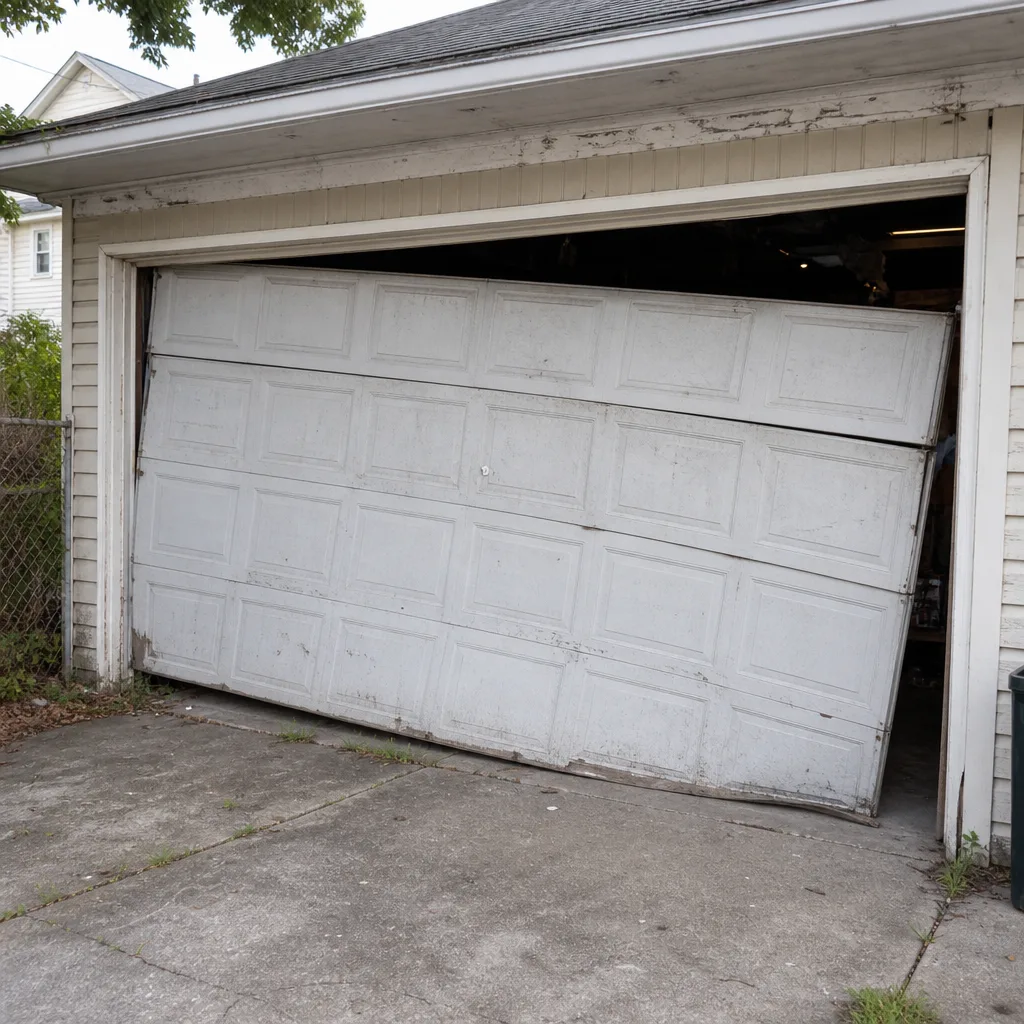 Before
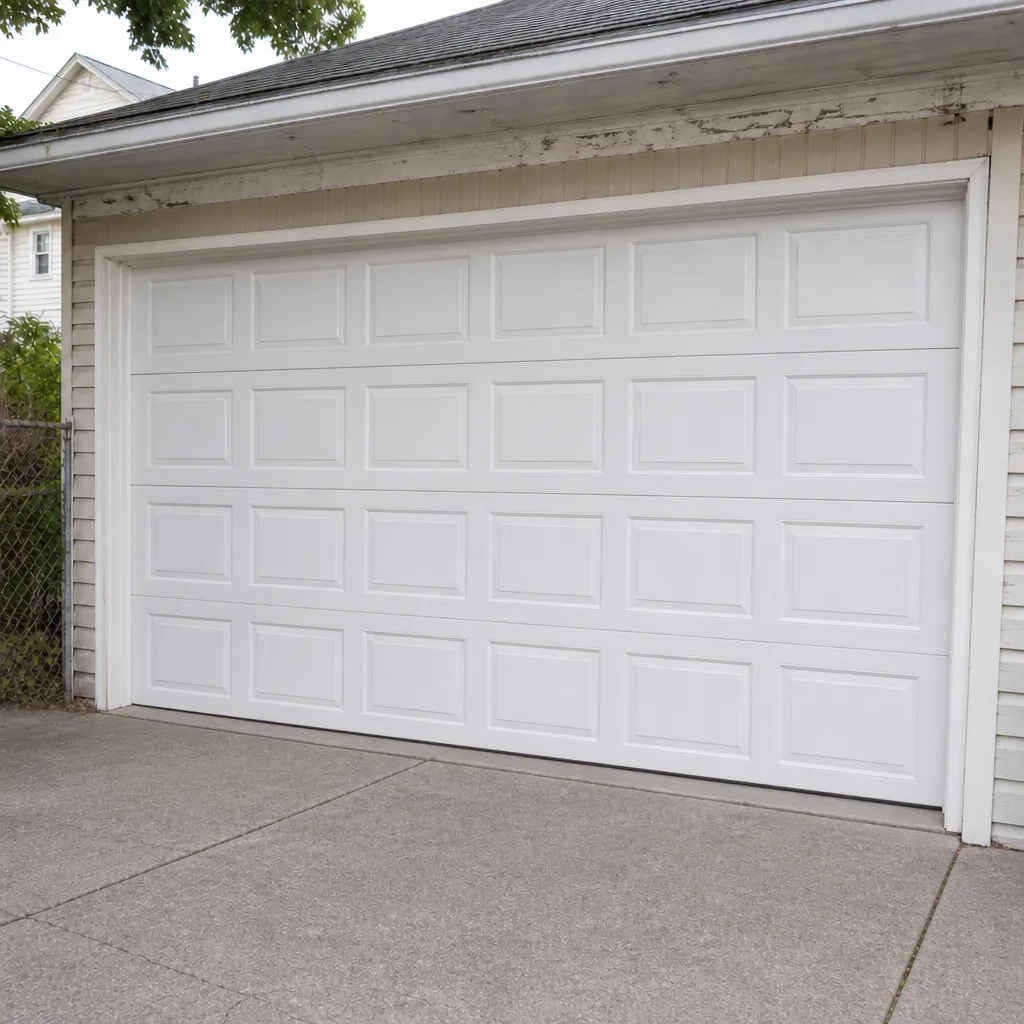 After
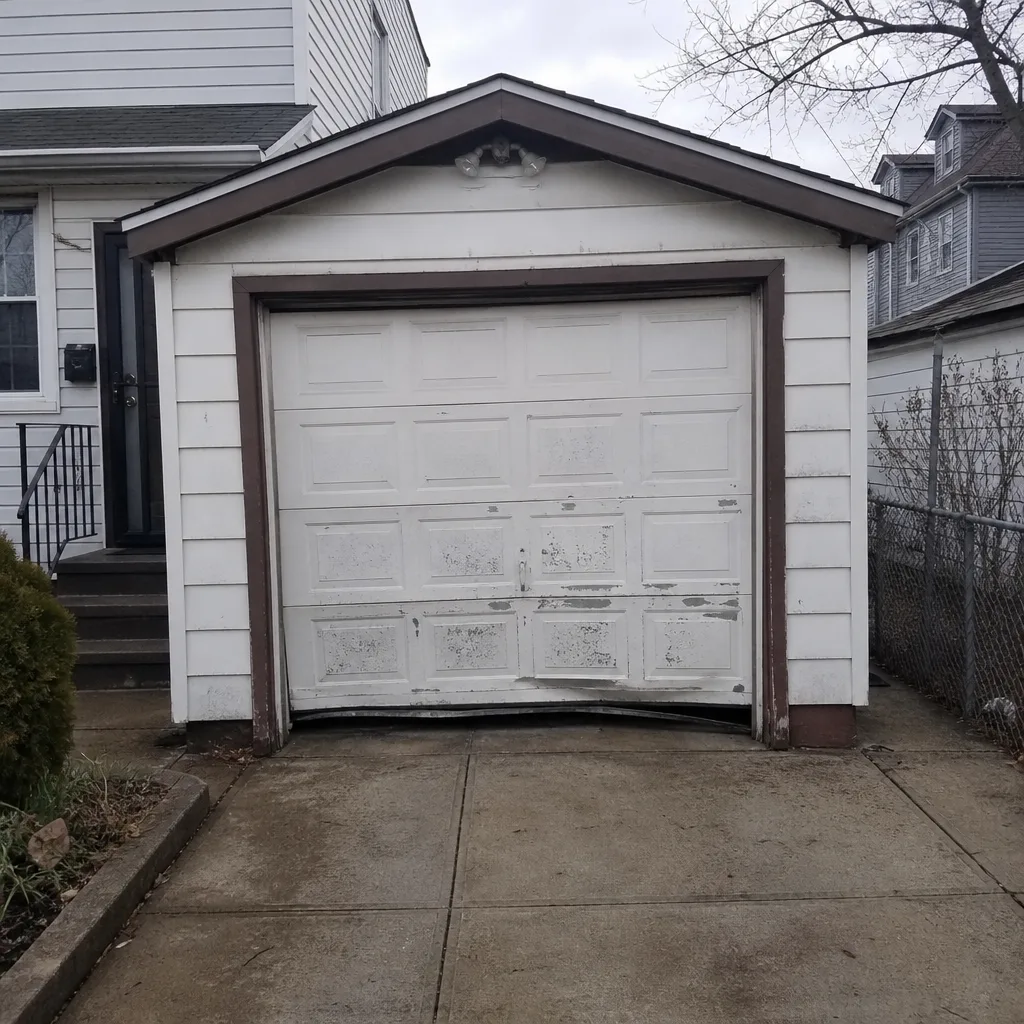 Before
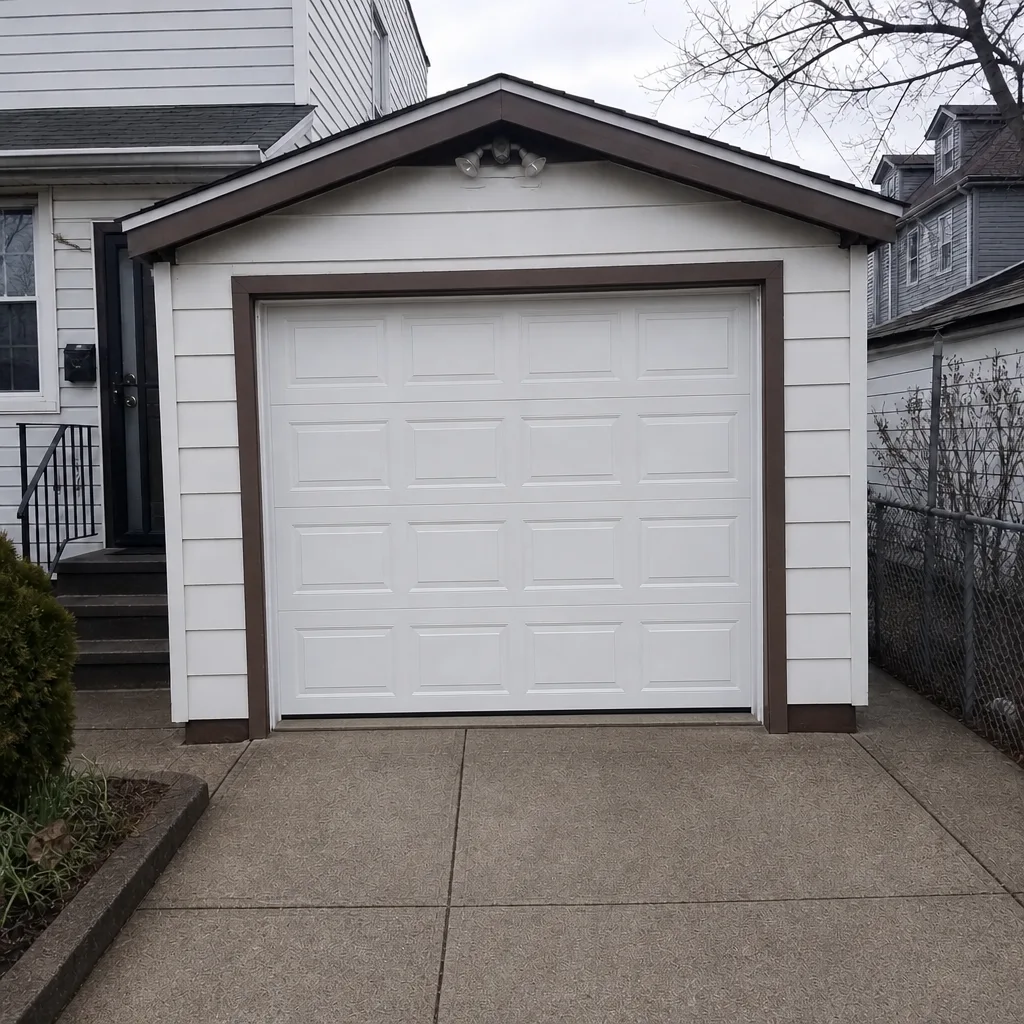 After
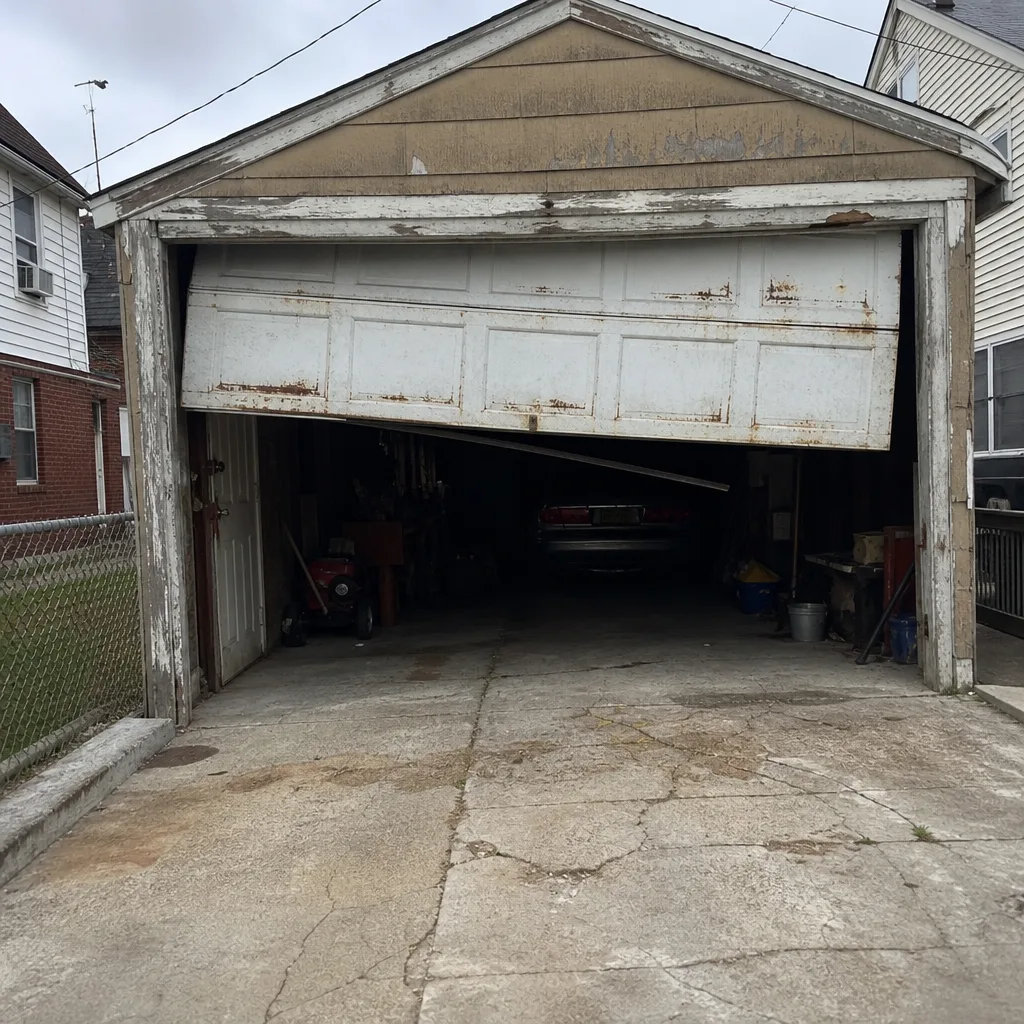 Before
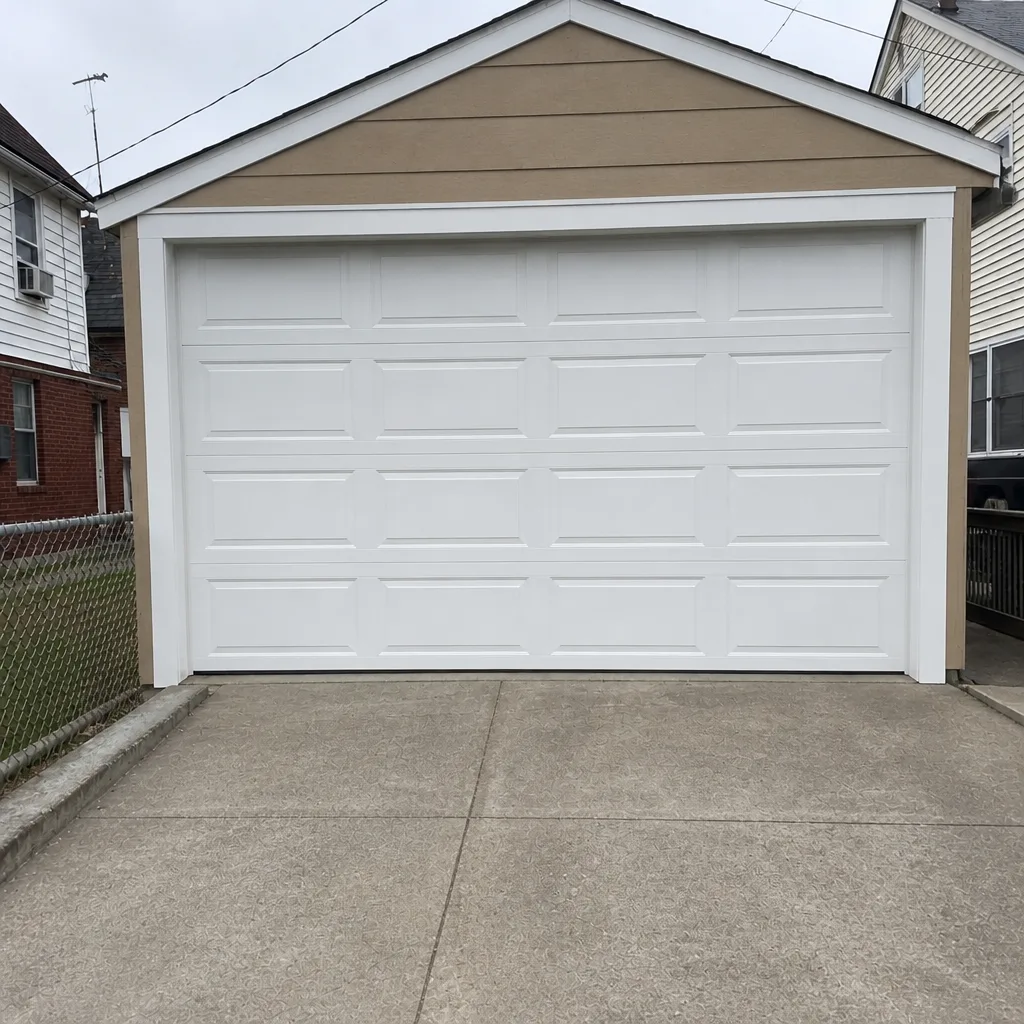 After
When to Call a Professional
Call a garage door specialist when the door won’t open or close, when a spring breaks, when the door reverses on its own, when the opener behaves erratically, or when you’re planning a replacement and you don’t know whether your existing door is fire-rated. Those are all scenarios where a focused look at the door saves time and prevents bigger trouble. Springs and cables, in particular, are not DIY territory: they’re under extreme tension and can injure a person badly if handled wrong. Garage Door Repair Soundview offers free estimates in Soundview – call (866) 690-8121. Our technicians have up to 12 years of experience and work on LiftMaster, Chamberlain, Genie, Clopay, Amarr, Wayne Dalton, Craftsman, and Raynor equipment, from emergency repair to full installation. When the door can’t wait, we’re the call for that too.
Frequently Asked Questions
Usually not, if the replacement is like-for-like: same size, same material, same fire rating, on a door that isn’t part of a fire separation change. If the opening, the door’s rating, or the structure around the door changes, a permit is more likely to be required. Confirm with the NYC Department of Buildings before ordering the door. If you’re not sure, call (866) 690-8121 and we’ll walk through what’s changing.
Filing fees for a DOB permit are set by the city and vary with the scope of the work, and a filing professional will quote their own fee separately. We don’t set permit fees; we handle the door. For an exact number on your job, check with the DOB or your filing professional. If you want a free estimate on the door work itself, call (866) 690-8121.
A fire-rated garage door is a door that’s been manufactured and tested to resist fire for a set period, protecting a fire separation between an attached garage and the living space. Whether your home needs one depends on the building and what’s on record, and the DOB or a licensed design professional is the person to ask. If you’re replacing a door on an attached garage, verify the rating first. We install rating-matched doors from brands like Clopay and Amarr and can talk through the specs with you. Call (866) 690-8121 for a free estimate.
Usually yes, but it’s a disclosure question and it’s better handled up front. New York sellers complete a property condition disclosure, and unpermitted work you know about is part of that. The fix is to confirm what was done, talk to a filing professional about bringing the record current, and be straight with the buyer. We repair and inspect doors throughout Soundview and can help you figure out what’s actually there – call (866) 690-8121 for a free estimate.
An inspection checks the mounting and attachment, the spring and cable system, the door’s balance and travel, and the safety features on the opener (photo-eye sensors and auto-reverse). On an attached garage, the door’s fire rating is confirmed against the record. The exact scope depends on what was filed. If your door fails on the safety features, that’s an opener repair, and that’s work we do – reach us at (866) 690-8121 for a free estimate.
No. Permit filings require a licensed design professional or an authorized expediter, and we don’t file permits on behalf of homeowners. What we do is assess the door, confirm the rating where it applies, install or repair the equipment, and coordinate with whoever is handling the filing. If you need a referral conversation, call (866) 690-8121 and we’ll help you frame the question.
The Bottom Line
The garage door permit question in Soundview comes down to what’s changing. A like-for-like replacement usually stays in maintenance territory. Changing the opening, the fire rating, or the use of the space is where the DOB gets involved, and that’s where a filing professional earns their keep. Fire-rated doors in attached garages are the point most homeowners miss, and it’s the one that matters most at sale time and after a claim. Keep the paperwork, verify the rating, don’t touch the springs, and get a specialist to look at the door before you list or file. When the door itself needs work, we’re the focused call: (866) 690-8121 for a free estimate.
Written by the team at Garage Door Repair Soundview.